
Case Studies
What happens when education entrepreneurs stop guessing and start leading.
Every business below came to me with the same surface problem: too many options, not enough clarity.
What we uncovered together was always a deeper problem. We found a structural misalignment, a pricing problem masquerading as a marketing problem, or a business that had outgrown its own systems. Here's what changed when we fixed the right things.








"I have very specific financials in mind now too, also because of our conversations. I remember us talking about ideal targets and working backwards to figure out, therefore, how many sales I’d need to make.
But I think I was guessing at the numbers a little, whereas now I’ve spent time thinking about it, I know exactly how many sales I need per quarter, and of what - and I FINALLY have a real-terms net GBP amount I make per sale, which I actually had never worked out before.
I can see right now I’ve made 12% of this quarter’s target sales… and we’re 12% through the quarter! And that’s WITHOUT having done the end of quarter sales pushes.
I just feel so in control for the first time, it’s amazing. So I cannot thank you enough!"
From the outside, George looked like a successful creator: a flagship YouTube scriptwriting course, an active community, a wildly popular email course, and some low-ticket products all making sales.
On the inside, he felt “drowning under the weight” of what he’d built, with no clear offer ladder, no real visibility into his funnel, and no intentional way to increase average order value or lifetime value.
Every sale felt basically one‑and‑done, and thinking about next year’s plan felt like guesswork.
We agreed that tweaking his product was going to be a waste of time. George's course was already world-class. Instead, we turned our attention to the business systems that surround his offers.
That meant building a simple customer insight engine (interviews + AI analysis), mapping his offer and funnel end‑to‑end, and deliberately designing ascension paths from the course into his pro community and beyond.
We also defined a concrete roadmap for increasing average order value and customer lifetime value that fit his strengths, and planned how his course should plug into partner ecosystems like Ali Abdaal and Colin & Samir’s loyal audiences.
Now, George has a living offer map and funnel map instead of a vague mental picture, so he can actually see how people move through his world.
He has a structured way to hear directly from customers, clearer ascension paths, and a realistic plan for adding bumps and upsells rather than “more products.”
Most importantly, he no longer feels buried by his own business; he understands what he’s built, how it works, and which levers to pull next.
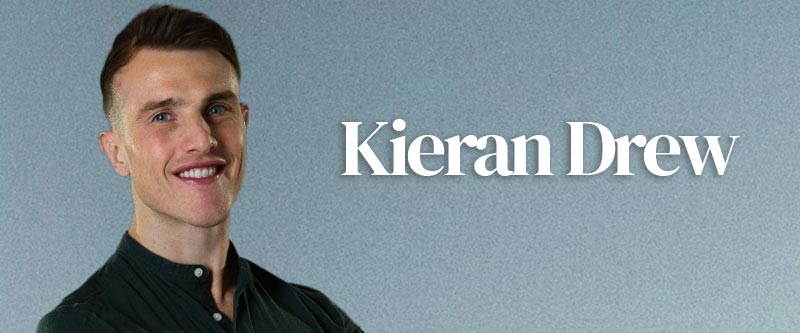
"Craig told me everything I needed to hear."
Kieran already had a successful writing education business and multiple six‑figure course launches, but his products were built largely by instinct.
High Impact Writing was selling well, yet he felt the teaching quality, structure, and delivery didn’t truly match his standards or the trust his audience was placing in him.
He was uneasy about building a long-term reputation on products he knew could be sharper, clearer, and more transformative.
We decided to treat his courses as reputation-defining assets, not just revenue events. That meant:
- Fully auditing High Impact Writing and rebuilding it around tighter frameworks, clearer lesson flow, and more intentional production, then upgrading all existing students.
- Designing Magnetic Emails and Productize Your Knowledge from the ground up with a distinct underlying mechanism, sharper scope, and a live cohort beta instead of rushing to evergreen.
- Drawing clean lines between what belongs in each product vs. future offers, and structuring launches, bonuses, and upsells to protect his energy while deepening student outcomes and brand trust.
Kieran now has a portfolio of courses he’s genuinely proud to sell that accurately expresses his brand.
High Impact Writing, Magnetic Emails, and Productize Your Knowledge have become durable, multi‑launch assets with strong completion and low refunds.
He now has a repeatable way to architect courses and launches, with greater confidence in his pricing, and a business that better reflects who he wants to be: a premium writing coach known for depth, craft, and long-term impact, not quick tricks.

"I think anyone as a business owner, especially in this information economy, if you're looking to increase your core sales, increase your student fulfillment and increase overall satisfaction.
Stop looking. Hit up Craig."
Jon came to me as a successful creator with what looked like a winning flagship: multiple live cohorts of Complete Creator, a $197 on‑demand version, a mid–five‑figure list, and big audiences on X and LinkedIn.
But under the surface, the model was flat and fragile.
He had only one way to buy and one price. No real value ladder. No order bumps or upsells... and a course built from his live‑teaching instincts rather than building from intention.
Launches “worked,” but only through personal effort and stress, and he still wasn’t sure if the product and system were actually sound.
We started by tightening who Complete Creator is and isn’t for, focusing it on serious creators and expert‑operators already publishing and wanting a leverageable business.
From there we architected a simple money model around the flagship: a stronger base offer, a mid‑tier implementation option, limited high‑touch advisory, plus a checkout bump and a post‑purchase one time offer to raise his average order value without bloating the core course.
We chose to treat the next launch as a structured beta, not a heroic one‑off, and rebuilt the product itself for short, focused clips with clear wins, structural hooks, and slides designed for mobile attention.
In parallel, we designed a basic proof system (student interviews, testimonial prompts, waitlist and re‑engagement flows) and a deliberate warmup plan, then ran a Cyber Monday launch with multiple, purpose‑driven emails per day and a real reward for the waitlist.
As a result, Jon created a flagship with a lifespan, not just a “big course that sells.”
His Cyber Monday launch generated roughly double the average order value of his previous best, off a cleaner, slightly larger list that still opens at around 50%.
His waitlist more than doubled in five days during warmup, and buyers began referencing specific frameworks and slides from the rebuilt course, not just leaving vague praise.
More importantly, he has a clear value ladder around Complete Creator, a course intentionally designed for completion and proof, and simple systems for testimonials and list growth that he can rerun.
The emotional tone of launches has shifted too...
Moving away from white‑knuckling alone and wondering if he’d “gotten away with it again,” he now runs a process he trusts which is built for the long term.

"I just knew that you knew everything there was to know about delivering good online courses and I love delivering good online courses.
And so I didn't have any doubt about your expertise."
Tessa was a pediatric emergency consultant who had turned her 1:1 senior‑interview coaching into a four‑week cohort academy that was already doing six figures and selling out each launch.
But underneath her wild success, everything was improvised. She was facing:
- a single overstuffed offer
- pricing and tiers designed by guesswork
- time‑intensive daily video feedback bundled into the core
- ad‑driven launches she rebuilt from scratch each time
- and no clean way to help doctors who got an interview date with only a few weeks’ notice
Tessa needed outside perspective to help make sense of it all.
We decided not to blow up what was working and instead work on the structure.
That meant:
- interviewing her best students to find what actually mattered
- restructuring the Academy into clearly defined tiers tied to real situations (foundation, interview‑soon, high‑stakes)
- turning “pocket coaching” from an ad hoc favor into a formal, interview‑date‑driven upsell
- tightening pricing so higher tiers matched the real load on her time
- and standardizing launches and webinar structure so each cohort was a controlled test, not a fresh gamble.
We also made deliberate choices about where she should stop being the operator, bringing in Becky to run cohorts and using tech to handle repeatable tasks.
Tessa still runs the same core Academy, but now it behaves like a flagship offer instead of a fragile experiment.
Now:
- cohorts fill at her chosen size
- doctors have clearer paths into the right tier and add‑ons
- ad-hoc coaching and interview‑date systems lift revenue per student without bloating the base offer
- and launches are more predictable and less founder‑dependent
On her side, she has more headspace, a team that owns delivery and ops, and a model she can see herself running four or five times a year while steadily becoming the obvious default over her competition.

"Since working with you, it's all starting to build up in my head about how to build this business even bigger now. My priorities have changed where I'm not flailing about trying to just to keep busy so I can work on things that actually going to move the needle for me. And I've got a much better idea now where I should be spending my time."
Matt had two solid courses teaching Facebook and Amazon ads to authors, but everything ran on quiet evergreen:
- no launches
- no urgency
- and no clear path beyond low‑ticket sales
There was no high‑ticket offer at all. No way for his best students to work closely with him, because he believed his audience “wouldn’t pay that.”
At the same time, he has young kids at home, and limited hours, so “just grinding more” wasn’t an option.
We first wrapped structure around what already worked:
- open/closed launches
- waitlists
- and warm‑up sequences around his existing courses so authors had a reason to buy now
Once we’d proven his audience responded to that, we designed and launched a proper mentorship program from scratch, pricing it in line with the real upside his best clients could get.
For new courses, instead of building in isolation, we built a "validation cohort" where students paid to access a live accelerator that generated $15K and shaped the curriculum.
Alongside that, we tightened his backend (order bumps, upsells, ascension into group and 1:1), built a high-ticket program, and restructured his calendar and beliefs so the model matched his actual life.
Today, Matt’s courses sell through planned launches instead of random trickles, and his mentorship arm, once nonexistent, has become a focused, six‑figure layer rather than a vague idea.
The new courses are validated and paid for by a live cohort before they ever hits his website.
His best authors now move through a clear ladder of courses, cohorts, and 1:1, while he actually takes Sundays off and spends fewer evenings chained to his laptop.
The business is no longer held together by willpower; a simple structure carries more of the load.
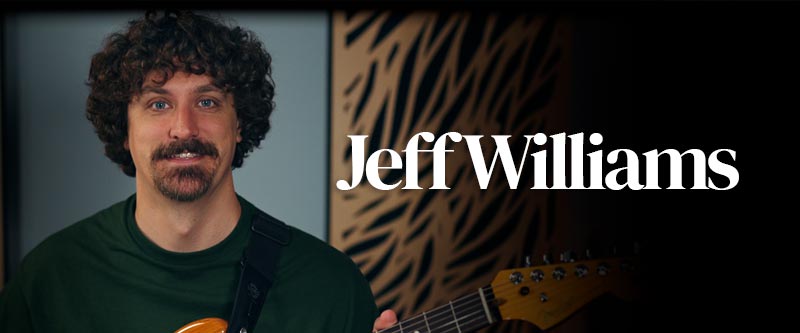
“I stopped thinking about ‘the next course’ or ‘the next big launch’ and started thinking in systems and profit.
Behind the scenes I finally feel like there’s a real machine, not just a pile of parts.”
Jeff Williams already had what most online guitar teachers are chasing: a solid 16-course library, a devoted YouTube audience, regular Patreon income, and fans who recognized him at mainstream events.
But underneath that success, his business felt a bit messy and fragile.
He had a catalog of overlapping offers with no clear progression, his lead magnets and email funnels leaked money, and he kept saying "no" to 1:1 lessons.
Jeff knew building more wasn't the answer. He needed more profit and more focus from what he’d already built.
First, we started by treating his body of work like an integrated system instead of a pile of products.
That meant:
- re‑organizing his 16 offerings into a clear ladder
- raising prices where he was undercharging
- and turning his highest‑leverage assets into proper funnels
We decided to install real data tracking (Fathom + UTM) so he could see which videos and lead magnets actually led to sales, and we built a simple customer interview process so he could hear, in his students’ words, what they wanted next.
Crucially, we stopped dodging the 1:1 demand and instead designed a structured, high‑ticket Guitar Growth Program built around a personal assessment, defined sessions, and clear outcomes.
Jeff’s business now feels like he's in control.
Students can see the obvious “next step,” his core courses earn more per buyer without more content, and his best lead magnets and sequences are wired to offers instead of dead ends.
He has a premium engagement he’s excited to deliver, not just a vague dread of going back to hourly work, and a simple analytics and interview rhythm that shows him what’s really working.
Most importantly, he no longer experiences himself as “the Grateful Dead backing track guy who sells some courses,” but as the architect of a business that matches the depth of what he’s already built.